Cell Phone Signal Boosters
Repeater and booster units that extend indoor cellular coverage in tunnels, basements, warehouses, and remote sites, with band options matched to local operators.
Cell Phone Signal Booster
2 models
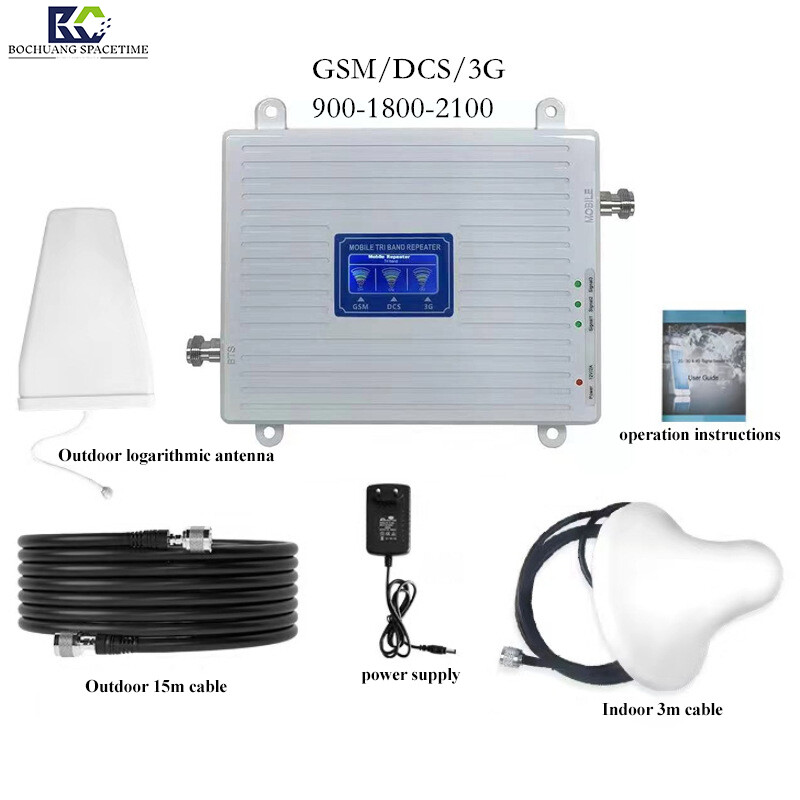
Tri-Band Mobile Signal Booster 900/1800/210 MHz
Cell Phone Signal Booster covering 2100MHz. and boosting 2G/3G/4G signals with our tri-band mobile repeater supporting 900/1800/210 MHz. Includes outdoor log antenna and indoor mushroom antenna.
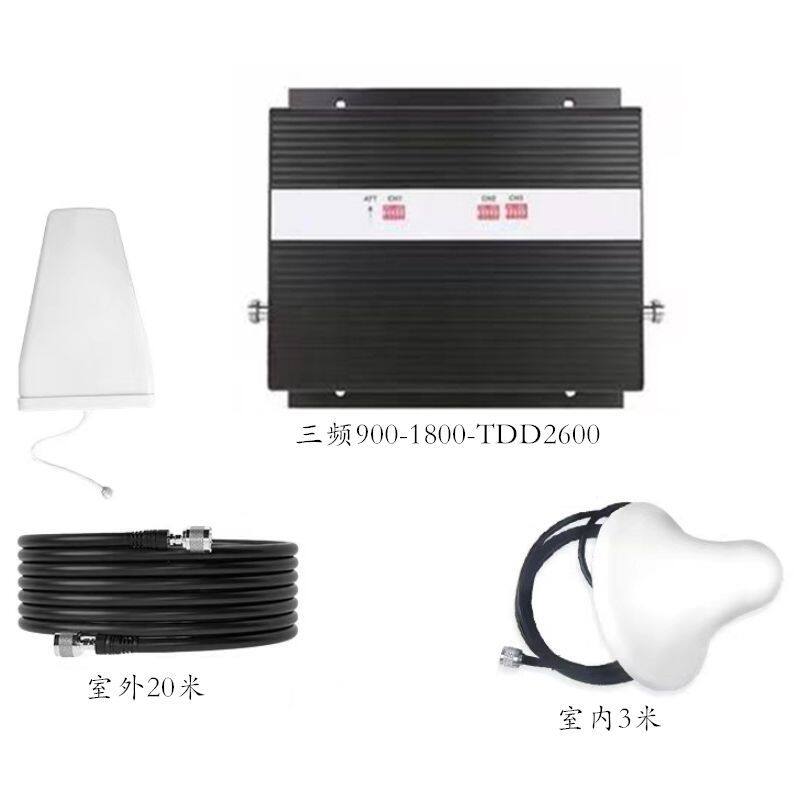
Quad-Band Mobile Signal Booster 800/900/1800/2100 MHz
Cell Phone Signal Booster covering 2100MHz., Boosting 2G/3G/4G signals with our quad-band mobile repeater supporting 800/900/1800/210 MHz. Includes outdoor log antenna and indoor mushroom antenna.
Buying guide
Start by identifying the active operator bands and the outdoor signal level at the installation site. If outdoor coverage is weak, pair the unit with a high-gain directional antenna precisely aimed at the serving base station. Indoors, select ceiling omnidirectional or panel antennas based on floor area and wall attenuation. Final coverage depends on host gain, output power, and uplink-downlink balance; excessive gain can cause self-oscillation, so ensure sufficient antenna isolation. Multi-band models support 2G, 3G, 4G, and 5G simultaneously. Typical deployment sites include tunnels, basements, warehouses, and remote facilities. Conduct a pre-installation site survey and perform a handover coverage test to minimize call-quality complaints.
Frequently asked questions
Can a booster be installed in any weak indoor area?
Start with a site survey. If outdoor signal is weak, use a high-gain directional donor antenna pointed at the serving base station; for indoors, select ceiling omnidirectional or panel antennas based on floor area and wall attenuation.
Will it impact the mobile network?
With proper gain and uplink-downlink balance, it operates normally. Maintain sufficient isolation between donor and service antennas to prevent oscillation while ensuring coverage remains within the target area.
Does it support multiple bands?
Yes. Units can combine 2G, 3G, 4G, and 5G bands based on the operators active at the site. A band reference table is included with each unit.